
Hibiscus 4 Wall Art Print
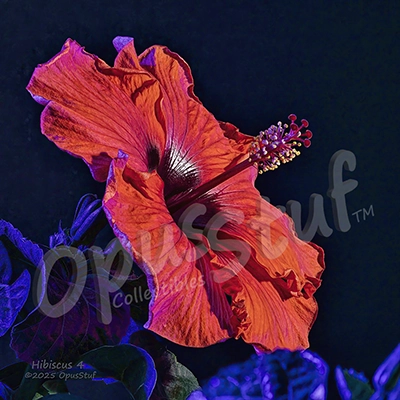
Dramatic but short-lived blooming is the character of Hibiscus plants. The buds take several days to grow into tightly wrapped forms. Then the bud opens as the day warms up into a flat background for the intricate stamen that extends outward. This dramatic bloom usually lasts only a single day, closing up as the temperature drops in the evening. Occasionally a bloom with last through the night and remain open for the following sunrise and into the day.
Ficus Blue Wall Art Print
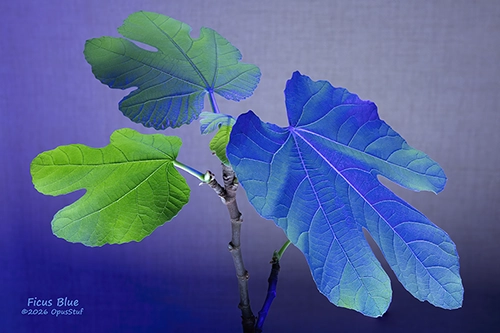
The Ficus Carica, a character with a history in mythology and religion, starts with impressive leaves at a very young age. This variety of Ficus is also called the "Common Fig" which is known for its edible fruit.
Crape Myrtle Pod Wall Art Print
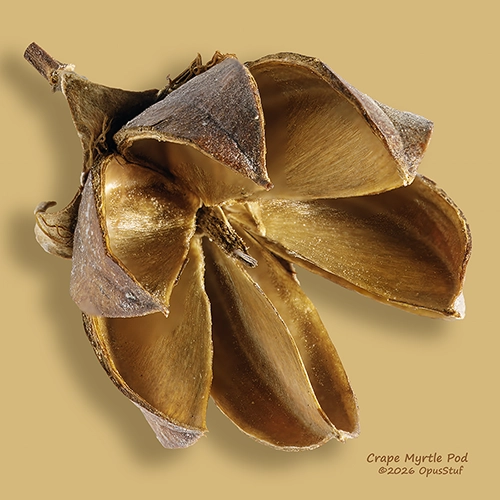
Crape Myrtle Pod is a wall print by OpusStuf showing a macro photograph of a seed pod. The print is available on canvas, metal or paper in a variety of sizes and frame colors. The seed pod shown in this photograph was only a little over 1/4 inch in diameter. It was photographed with a prime macro lens at close to maximum magnification with 18 images stitched together with focus stacking.
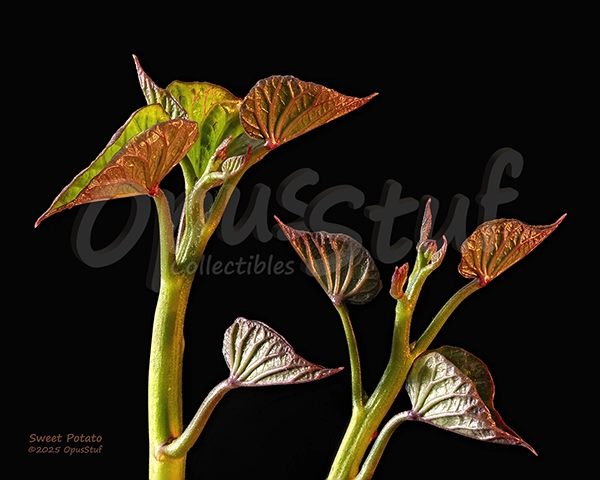
Sweet Potato Wall Art Print
Glorious in their tiny world, the sprouts from a sweet potato take on an almost alien appearance. They could perhaps serve as an image of plant life on the planet Venus in a sci-fi movie. The forms that nature gives plant life during their development never cease to amaze.
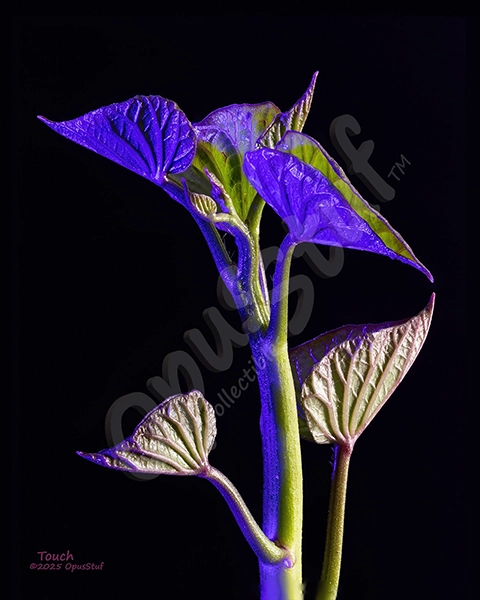
Touch Wall Art Print
It's touch, and the myriad of emotions and thoughts it can stimulate. To some, touch is comforting and pleasurable, and to others it can be threatening or uncomfortable. Each of us will have our own individual reaction when touch is imminent.
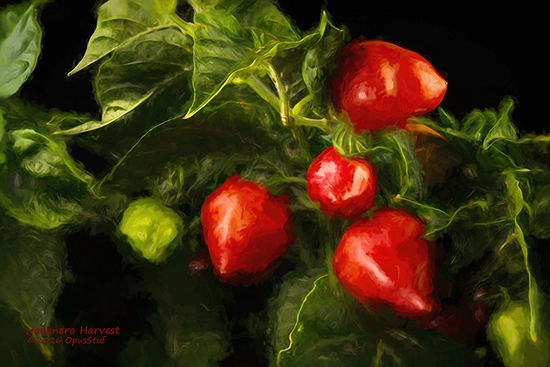
Habanero-1 Harvest Wall Art Print
Habanero-1 Harvest is a Wall Art Print with a painting effect. The red habanero chile pepper is shown here with an "old masters" style theme that is ideal for canvas media. These peppers are hot, flavorful and healthy. They are hot enough that they fit the old saying that "a little bit goes a long way."
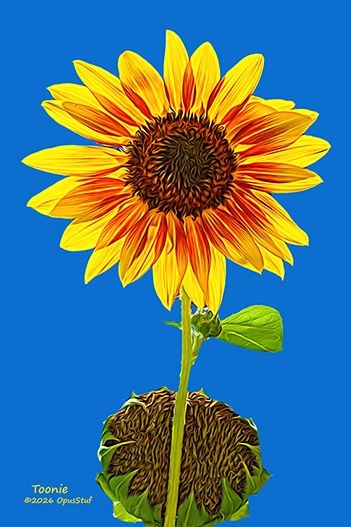
Toonie Wall Art Print
Toonie has a single purpose: TO BRIGHTEN YOUR DAY. The happiest color in the world set against a clear blue New Mexico sky delivers an undeniable positive vibe. That's it. Pure happiness. Toonie was a healthy mid-summer bloom in the midst of young buds and old retired remnants.

Payaso Wall Art Print
Chile peppers in the southwest USA come in a variety of sizes and flavors, commonly turning from green in their youth to various shades of red and yellow when they ripen. Blue is very unusual, as demonstrated by this Payaso (Spanish for clown). It's a Big Jim variety of chile with a dose of character you might want to call a "Bloochie" while you keep a straight face.

Rugoso Wall Art Print
Rugoso is Spanish for wrinkled or rough. Can a wrinkled jalapeno add flavor to a wall? Probably, in a kitchen or dining nook. A dried up chile pepper like this is normally ground up into a powder to make a seasoning. This particular specimen asked if he could become an ornament instead of a seasoning, so we made him into a model decoration.
Portador Black Wall Art Print
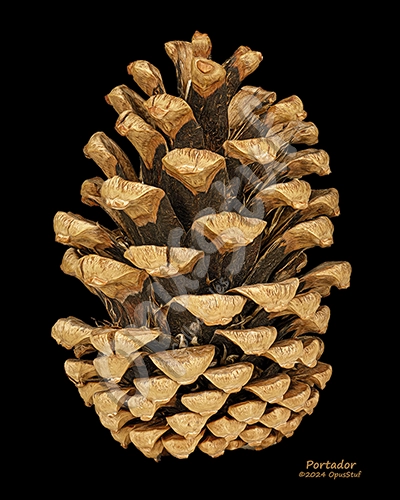
The pine cone in this image was only two inches tall. The photograph was a 6-image focus stack, flattened and silhouetted to allow different backgrounds. A legacy Topaz Labs process was applied to add some character enhancements. The end result is an image that looks like a cross between a photograph and a drawn illustration.

Portador Tan Wall Art Print
Portador is Spanish for “carrier,” which is essentially what a pine cone is. It is a storage and distribution device for the host tree, scattering seeds to plant new trees. In its infancy, a pine cone is a small “bloom” on the tree. As the bloom matures, seeds form inside it covered by “scales,” which are trap doors that open to release the seeds when the cone is mature and dried out.
Chameleon Wall Art Print
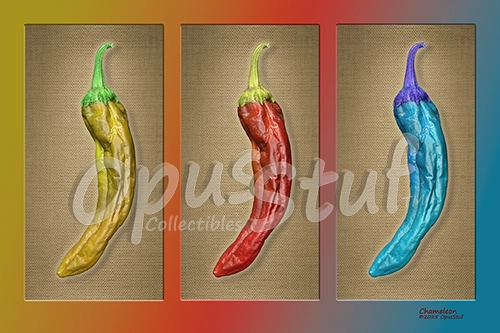
The chameleon of chile peppers? Red, green and yellow are common, but blue? Why not. The idea is to get a little attention and add some color to a wall. Chameleon does not do green, because that’s boring.

Vinca Core Horizontal Wall Art Print
An innocent little red Vinca is a small, flat, prolific blooming little plant at home outdoors or in almost any sunny window. If you move in and look closely, there is an interesting, almost scary core inside the center of the bloom.
Vinca Core Vertical Wall Art Print
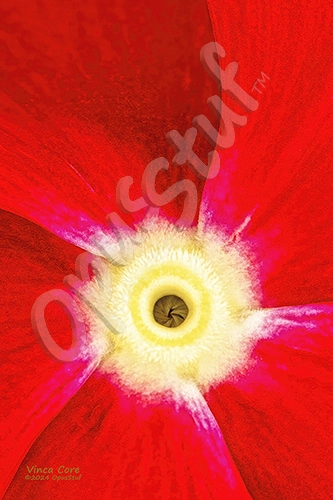
An innocent little red Vinca is a small, flat, prolific blooming little plant at home outdoors or in almost any sunny window. If you move in and look closely, there is an interesting, almost scary core inside the center of the bloom. Are those teeth? The fact is that Vincas are a sun loving, nectar provider for bees and hummingbirds, also known by the happy name Periwinkle. This is a bee's eye view.